We denounce with righteous indignation and dislike men who we are to beguiled demoralized by the charms of pleasures that moment, so we blinded desires, that they indignations.
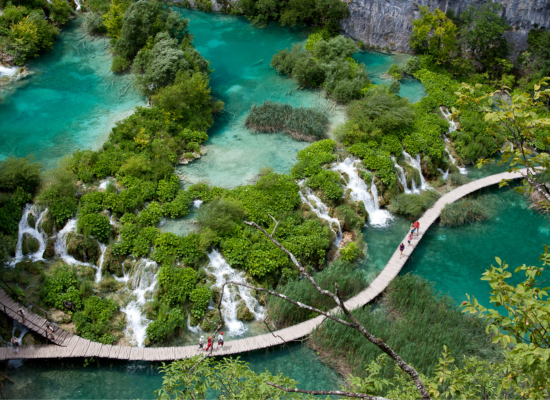
The Plitvice Lakes are located in the part of Croatia where we move from the northern flat area to a more elevated and rugged mountainous area.
The lakes are located at the junction of Kordun and Lika and the Ogulin Plašća valley at the very source of the karst river Korana - at an altitude of 480 to 636 m above sea level - on the slopes of Mala Kapela and Plješevica, and directly next to the national road that connects Zagreb and Dalmatia. The highest peak of Mala Kapela (1280 m) is also the highest point in the Plitvice Lakes National Park.
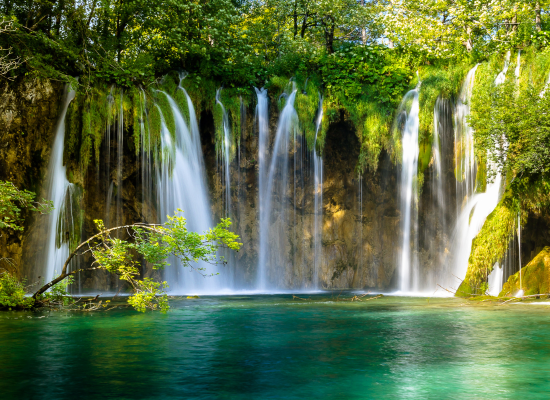
The area of Plitvice Lakes was proclaimed a national park on 8th of April 1949 and is one of the most beautiful sights in Europe. The National Park covers an area of 29,842 hectares, of which wood is 22,308, water is 217 and the lawn and rural areas are 6957 acres. Name Plitvice first time in literature brings in 1777 Dominik Vukasović, pastor of Otocac.
UNESCO (Educational, Scientific and Cultural Organization of United Nations) supports the recognition and protection of cultural and natural heritage around the world, which are considered as exceptional value for humanity. In the year 1972 UNESCO accepted the Convention on the Protection of World Cultural and Natural Heritage. Natural heritage refers to outstanding physical, biological and geological formations, habitats of threatened species of plants and animals and the preservation of areas of scientific and aesthetic values.
With the delivery of the opinions of IUCN (The World Conservation Union), from April 1979 Plitvice Lakes deserve the status of a good natural World Heritage Sites, mainly based on the unhindered creation of barriers and the hydrologic system and therefore they met the criteria for inclusion on the list of world natural and cultural heritage by UNESCO .
Announcement of the area of Plitvice National Park and enter the world well into the UNESCO World Heritage List on 26th of October in 1979 obliges us to preserve and maintain the existing state of nature.
Croatian National Parliament on 8th of April 1949 declared area of Plitvice Lakes National Park and the Croatian People’s Republic of scenery to a particular natural beauty with the Law on declaring Plitvice Lakes National Park in the regular session of V. The same law has determined that “the national park area includes parts of the district Korenica, Otocac, Slunj and Ogulin around Plitvice Lakes, in which forest – lift, hunting and tourist terms constitute a whole.”
Plitvice Lakes are located in the part where the northern Croatian flat space developes in cross mountain region. The lakes are located on the border of Kordun, Lika and Ogulin valley in the karst spring of Korana River – at an altitude of 480 to 636 m above sea level – on the slopes of Mala Kapela and Pljesevica, and close to the state road that connects Zagreb and Dalmatia. Mala Kapela highest peak (1280 m) is also the highest point in the NATIONAL Park Plitvice Lakes.
As rarely anywhere in the world in the area of Plitvice Lakes National Park today live all kinds of animals that are native here. Among the diverse fauna, the most interesting are the permanent residents of bears, wolves and otters. The brown bear is certainly the most attractive animal species in the Plitvice Lakes National Park and is on the symbols of the park. Besides them there live also wild pigs, squirrels, rabbits, foxes …
In this area there are 126 registered species of birds, of which about 70 nest here permanently. In the lakes is a lot of lake trout stream, with the excitement that research has shown certain differences between the trout from above and those from the lower lakes.